How Deep Does a Residential Well Need to Be in Central Pennsylvania?
One of the first questions new-construction buyers and rural homeowners ask is how deep a residential well needs to be. It is a fair question, and it does not have a one-number answer. In Huntingdon County and the rest of South Central Pennsylvania, two neighboring properties can hit good water at very different depths because the rock, the fractures, and the water table are not the same from ridge to valley.
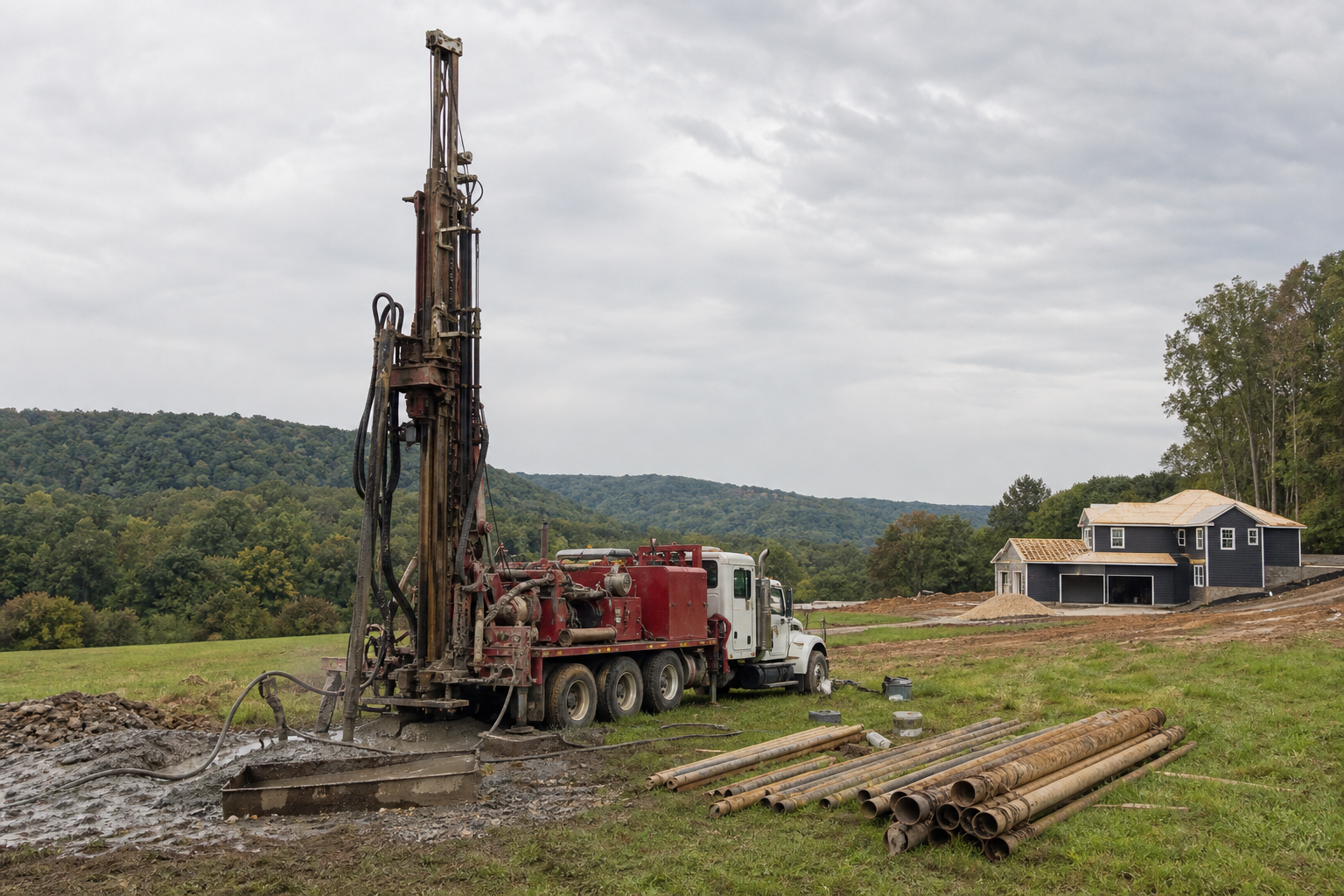
Walters Well Drilling, LLC drills residential, commercial, and agricultural wells throughout this region, with rigs capable of reaching 1,200 feet when a property needs it. A well should reach a water-bearing zone that can support the household, with enough extra footage that a drop in the water table does not leave the pump sucking air.
What Determines Well Depth
Geology. Huntingdon County sits in Pennsylvania's Ridge and Valley country. Groundwater here is not a big underground lake. It moves through fractures in sandstone, shale, and limestone. A drill may pass through dry rock and then hit a productive fracture a few dozen feet later. The depth of those fractures is what sets the well, not a standard number on a permit form. Many homes here are served by wells a few hundred feet deep. Some are shallower. Some need to go considerably deeper, especially where the first water-bearing fractures are thin or seasonal.
The water table. The static water level rises and falls with rainfall, snowmelt, and seasonal use. A well that just barely reaches water in a wet spring may not keep up in a dry late summer. Depth is as much about staying in water year-round as it is about finding water on drilling day.
Local conditions. Nearby wells, the slope of the land, setbacks from septic systems, and how much water the household will use all factor in. A small cabin and a family home with irrigation are not the same job. When we drill in Shade Gap, Huntingdon, Mount Union, or the surrounding communities, we look at neighboring well history and the specific site, not a generic Central Pennsylvania average.
What Homeowners Can Expect During Drilling
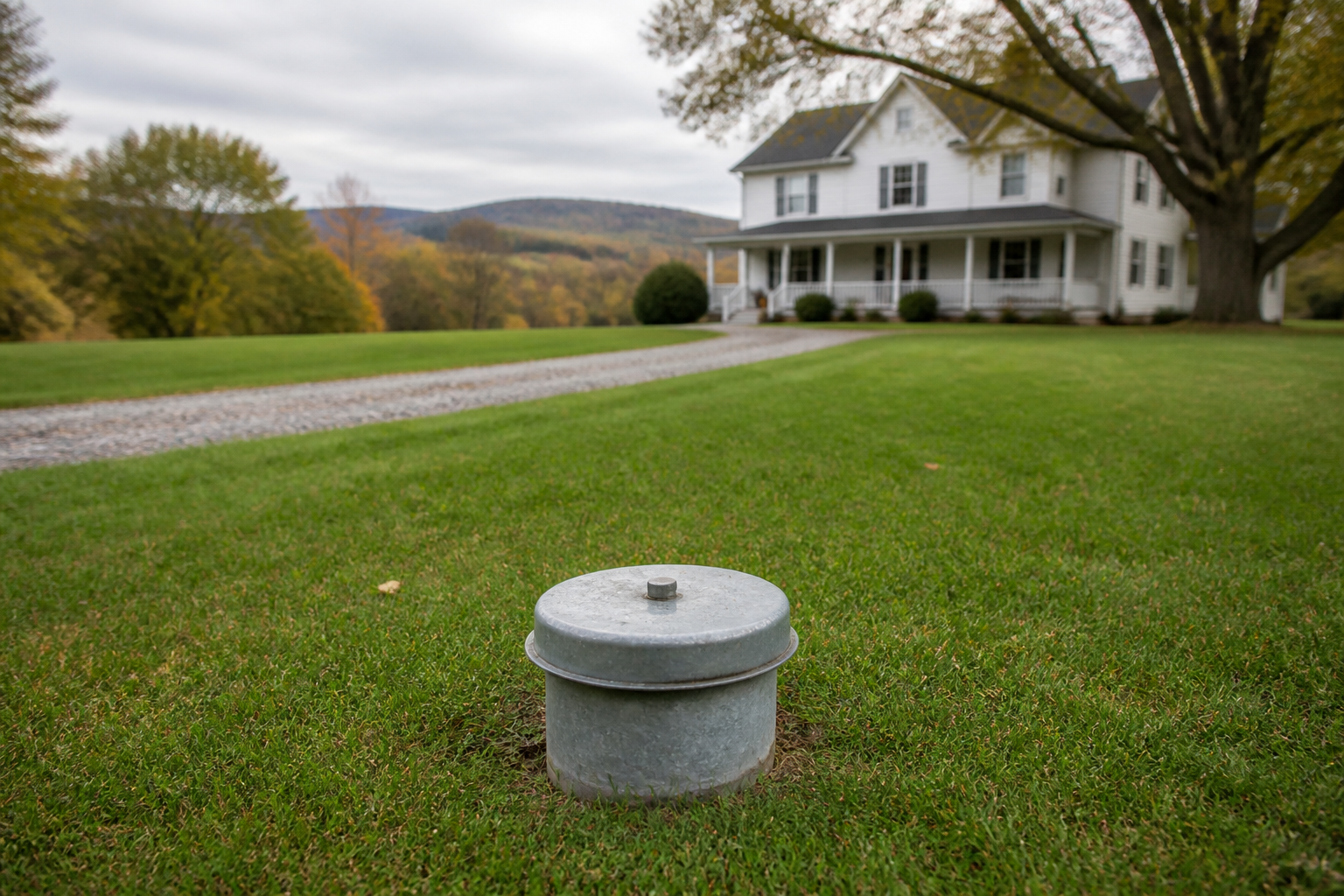
A residential well job starts with siting. The well needs proper setbacks from septic systems, livestock areas, and property lines, and it needs access for the rig. Once the location is set, the rig drills through overburden and into bedrock. Casing is set and grouted to keep surface water and soil out of the well. Drilling continues until the well produces enough water to serve the home.
Yield is measured as the well is developed. A typical household needs a few gallons per minute used in bursts, so a modest-yielding well can still be a good well if it recovers and the pump and pressure tank are sized correctly. After drilling, the well is cleaned, a sanitary cap goes on, and the pump is set with a safety margin above the bottom. Keep the well log that records depth, casing, yield, and pump setting. Those records matter when you service the pump or sell the house.
Why Depth Matters for Water Quality and Reliability
Shallower wells, and older dug or driven wells, are more exposed to surface influence. Rain, septic leakage, livestock, and fertilizer have a shorter path to the water. A properly cased, grouted, drilled well that reaches a deeper bedrock aquifer is generally better protected. Depth is not a guarantee of perfect water — iron, sulfur, and hardness are common in South Central Pennsylvania at many depths — but a well that is deep enough and sealed at the surface is a much more reliable starting point than a shallow well that skims the top of the water table.
Reliability is the other half. A well that is only marginally into water will show it during drought: faucets sputter, the pump cycles harder, and in a bad year the well can go dry. A bigger pump cannot invent water. If you are planning new construction in Huntingdon County, talk with a driller before you finalize the house location, and budget for the well as a range, because the final depth is determined in the ground, not on paper.
Get a Drilling Estimate From a Local Crew
Walters Well Drilling, LLC provides residential well drilling, pump installation, and dried-up well solutions across Huntingdon County and South Central Pennsylvania. If you are planning a new well or trying to understand why an existing well is shallow, call (814) 259-3985 or email walterswelldrilling@gmail.com for a drilling estimate. We will look at your property, not a generic depth chart, and tell you what it will take to get reliable water.
This article is intended for general informational purposes. Actual well depth is determined on site by a licensed well contractor.
Recent Posts